
What is Skin Barrier – And Why is it Important for You.
Every product you use either builds your Skin stronger or tears it apart.
For a more detailed study, read Skin Barrier.
Key Take-Aways
“If your expensive skincare routine is failing – you need to look into your skin barrier health.”
What is Skin Barrier – The Physics
What if your skin was a wall you’ve been unknowingly breaking down? The truth behind your barrier might change the way you wash your face forever.
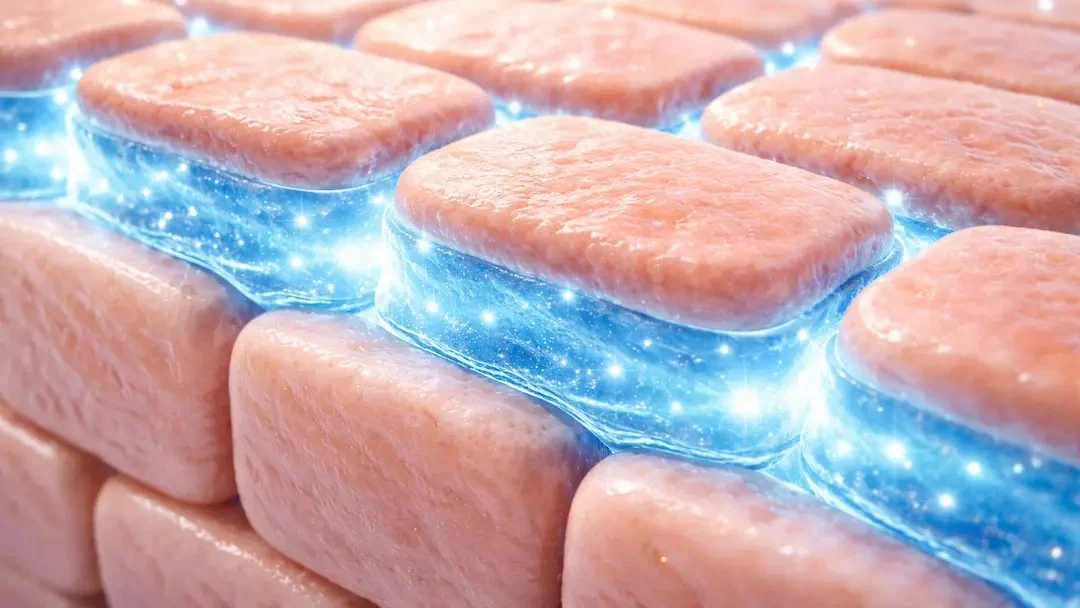
The Bricks (Corneocytes)
Imagine your skin’s outer layer like a wall made of tiny bricks. Each brick is a flat, dead skin cell packed with Keratin—a tough, protective protein—and another helper called Filaggrin. Filaggrin’s job is to pull keratin fibers together, giving each cell strength and firmness, just like compact bricks in a wall.
If your bricks are weak, your skin’s surface loses structure—so even the best serums can’t smooth or brighten properly.
The Mortar (Lamellar Lipids)
Now, that wall needs mortar to hold everything in place. In your skin, the “mortar” is a mix of barrier lipids— ceramides, cholesterol, and fatty acids—that fill the gaps between the cells. These healthy fats keep the surface sealed, smooth, and flexible, helping your skin stay strong and hydrated.
If your mortar breaks down, moisture escapes through TEWL, and your moisturizer simply can’t lock in hydration.
The Rivets (Corneodesmosomes)
These are the protein “staples” that lock the bricks together. If you over-exfoliate, you aren’t just “brightening”—you are physically snapping these rivets, leading to a structural collapse we call barrier failure.
If your rivets snap, the barrier loosens—making actives sting, serums irritate, and your skin react instead of heal.
What is Skin Barrier – The Chemistry
The Acid Mantle & Enzyme Activation
On top of your skin lies a delicate layer called the acid mantle—a super thin film made from your natural oils (sebum) and sweat. It’s slightly acidic, with a pH between 4.5 and 5.5, and that acidity acts like a bodyguard. It keeps harmful bacteria like Staph aureus out while supporting the “good guys”—the friendly bacteria that help your skin stay balanced and healthy.
If your acid mantle is stripped by harsh cleansers, your skin loses its natural defense and even gentle products can start to sting.
Enzymatic Catalysis
That gentle acidity also works as your skin’s repair switch. Many repair enzymes, like sPLA2 and β-glucocerebrosidase, can only do their healing work in an acidic environment. So when you wash your face with a high-pH or alkaline cleanser, you’re not just removing dirt—you’re actually turning off your skin’s self-repair system.
If your skin’s pH turns alkaline, repair enzymes stop working—so healing slows and your barrier stays damaged.
The Buffer Capacity
Healthy, youthful skin can bounce back from a pH disturbance thanks to its strong buffering ability, quickly returning to its normal acidity. But over time, factors like urban pollution and stress—especially in cities like Lahore—slow that recovery. When the acid mantle can’t rebound, the skin stays vulnerable, dry, and more prone to irritation.
If your buffering capacity weakens, your skin can’t bounce back after washing—leaving it prone to dryness and irritation all day.
What is Skin Barrier – The Biology
The Microbial Roof & Postbiotics
We now know that skin isn’t “sterile” or squeaky clean—and that’s actually a good thing! Your skin has a microbial roof, a living layer made up of friendly bacteria like Staphylococcus epidermidis. These little residents sit on your surface and help protect you every day.
If your microbial roof is stripped away by over-cleansing, your skin loses its first line of defense and becomes reactive to almost anything.
Commensal Factories
Think of these microbes as your skin’s tiny engineers. S. epidermidis isn’t dirt—it’s like a mini factory that helps your skin produce natural ceramides, the fats that keep your barrier soft, smooth, and hydrated. So instead of stripping them away, it’s better to care for them.
If you disrupt your commensal factories, your skin stops making enough natural ceramides—leaving it dry no matter how rich your cream is.
AMPs (Antimicrobial Peptides)
When your microbiome is healthy, it acts like an active shield. Your skin creates its own natural antibiotics, called cathelicidins and defensins, to fight off harmful bacteria. By feeding your microbiome with postbiotic ingredients, you’re strengthening your skin’s defense system—helping it stay calm, balanced, and resilient from within.
If your AMPs are weakened, your skin’s natural “micro-army” can’t fight off bad bacteria, making breakouts and inflammation harder to control.

Ending Note
When you understand how your skin truly works, you start caring for it in a smarter way. You choose cleansers, exfoliants, and moisturizers that work with your biology, not against it. The result? Skin that heals faster, stays hydrated longer, and feels naturally balanced. It’s amazing how a little science can transform your routine – so what happens when daily stressors start breaking that balance? Let’s explore the hidden factors hurting you skin barrier in next read.
Leave a Reply