
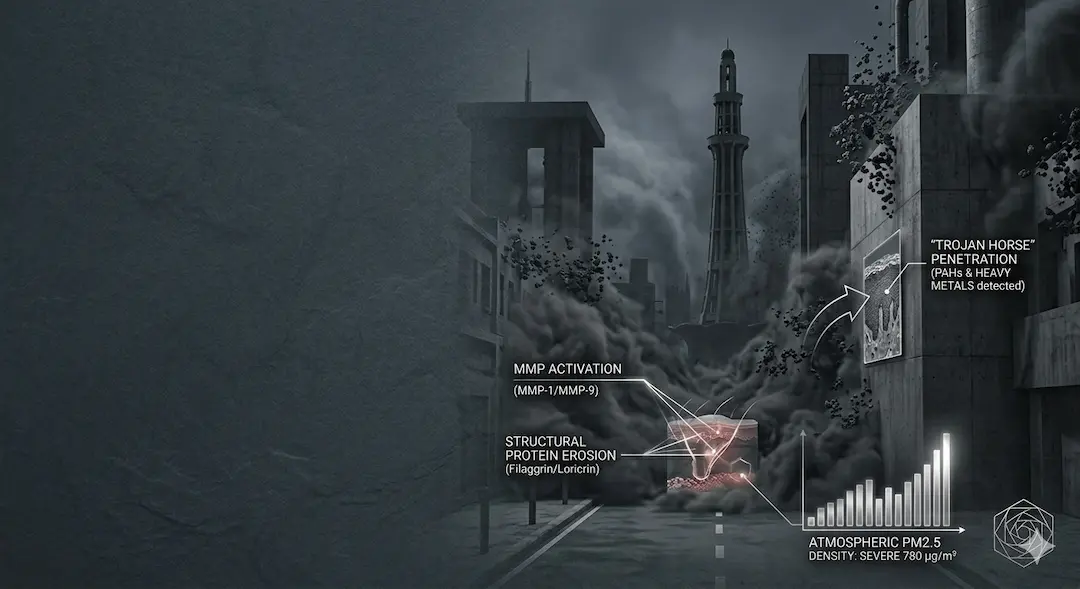
Smog‑Aging: The City Skin Crisis
Smog-Aging is real. In many big cities around the world, the air you breathe and the skin you feel are both quietly under attack. Smog, dust, and pollution don’t just affect your lungs – they also speed up how your skin looks and feels over time. That is why more people are starting to ask about “smog‑aging” and what it means for their skin barrier.
Smog‑aging is a quiet issue, but understanding it can help you protect your skin before the damage becomes obvious.
If you want to learn everything about “Skin Barrier” and “How to take care of it“, Read full length articles.
How Smog-aging Changes Your Skin
In cities like Lahore, Delhi, Beijing, or Los Angeles, pollution is often treated like a regular part of life, but the skin takes a daily hit. Fine particles like PM2.5 are tiny enough to sit on the skin surface and even mix with sweat and oil, which can irritate the barrier and trigger more inflammation.
This constant exposure can make skin feel dull, rough, and more reactive, especially in people who already have dry or sensitive skin.
If your skin looks dull or irritated in the city, pollution may be working against it more than you realize.
Why Smog Speeds Up Aging
Smog does not just make air quality worse — it also makes skin age faster. The tiny particles and gases in smog create oxidizing stress, which can damage collagen and other support structures in the skin. When your skin loses structural support, it can show early signs of loss of firmness, fine lines, and slower healing.
Smog‑aging can make your skin look older than it should, even if your routine feels like you are doing enough.
How It Affects Different Skin Types
In areas with strong pollution, both dry and oily skin can be affected. Dry skin may feel tighter and rougher, with more visible flaking and irritation. Oily or acne‑prone skin can experience more clogged pores, breakouts, and uneven texture from the mix of pollution and sebum on the surface.
If your city life makes your skin either very dry or very breakout‑prone, smog could be making the problem worse.
The Barrier Is Under Siege
Your skin barrier is designed to protect you from the world around you, but constant pollution exposure can weaken it over time. When this happens, water escapes faster and irritants get in more easily, which is why many people feel dry, tight, or stingy when using products that once felt fine.
If your skin suddenly feels sensitive or tight in the city, your barrier is likely under stress.
How To Fight Back: Skin Care Tips
The best way to protect your skin from smog‑aging is to support your barrier and protect it from daily stress. Use gentle cleansers, antioxidant serums, and barrier‑supporting moisturizers that contain ingredients like ceramides, niacinamide, or ectoin, which can help shield your skin from pollution and oxidative stress.
Daily broad‑spectrum sunscreen is also important, because UV plus pollution can make aging signs appear faster.
A routine built for city life keeps your skin stronger, calmer, and more even over time.
Ending Note
Smog‑aging is real, but it is not unstoppable. By understanding how pollution affects your barrier and choosing the right ingredients, you can protect your skin from the inside out. The goal is not to live in a bubble — it is to give your skin the tools it needs to withstand the city.
For all those living in polluted and smog infested cities, learn the signs of barrier damage and a barrier first daily skin care routine.
Leave a Reply