
Skin and Stress: The Link You Can See In The Mirror
You know that feeling when life gets hectic and your skin suddenly looks dull, feels more sensitive? That is not a coincidence. Stress can show up on the skin because the skin and brain are closely connected, and when stress stays high, your skin barrier can start to struggle too.
When your skin changes in times of stress, it is not a “random breakout.”
If you want to learn everything about “Skin Barrier” and “How to take care of it“, Read full length articles.
The Relationship of Skin and Stress
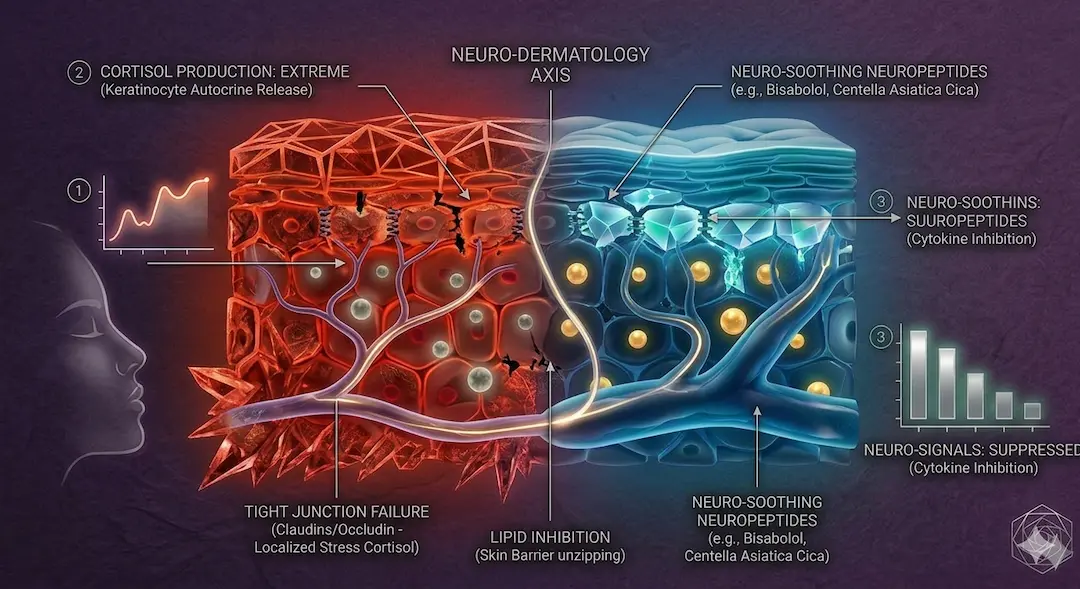
When stress rises, your body releases more cortisol, and skin cells can also make cortisol locally. Research shows this can weaken the skin barrier by affecting tight junctions, reducing skin repair, and lowering the skin’s ability to hold on to moisture. In plain language, stress can make the skin’s “seal” less secure, so water escapes faster and irritation gets in more easily. Read signs of a damaged barrier here.
Cortisol is your body’s main “stress hormone” that tells almost every organ how to respond under pressure. It raises blood sugar, controls inflammation, and helps manage blood pressure, but when it stays high, it can slow down collagen production and weaken skin repair over time.
Cortisol can actually be made inside your skin cells, not just in the brain, which means stress can weaken your barrier right where it lives. See signs of barrier damage here.
Stress Can Make Your Skin Age Faster
Stress does more than make you feel tired, it can make skin look older, too. Chronic stress has been linked with more water loss, slower barrier recovery, and lower production of protective skin lipids, which means the outer layer becomes weaker over time. That can show up as dryness, roughness, fine lines, and skin that takes longer to bounce back after irritation.
If your skin seems to recover more slowly lately, stress may be part of the reason.
What Your Skin Starts To Do
When stress is high, some people notice more redness, stinging, flaking, or skin that suddenly reacts to products that used to feel fine. Others notice more breakouts or a dull, tired look because the barrier is not keeping moisture in properly. That is why stressed skin often feels both irritated and dehydrated at the same time.
Stress can make skin both sensitive and dry, which is why the symptoms can feel confusing.
The Calming Ingredients That Help
The best skincare move for stress‑affected skin is to keep the routine gentle and use soothing ingredients that support the barrier. Centella asiatica and bisabolol both have research showing anti-inflammatory and calming benefits, and Centella may also help improve hydration and barrier function. These ingredients do not erase stress, but they can help skin feel less reactive while it repairs.
If your skin feels overwhelmed, calming ingredients can help it settle without making the routine heavy.
Why Simple Routines Work Better
When skin is stressed, too many active ingredients can make the problem worse. Strong exfoliants, harsh cleansers, and aggressive treatments can add more irritation when the barrier is already under pressure. A simpler routine with gentle cleansing, barrier-supporting moisturizer, sunscreen, and a soothing serum usually works better than piling on more steps.
The more stressed your skin is, the more it usually benefits from less—not more.
Sleep, Recovery, and Skin
Sleep matters more than most people realize because stress and poor rest both slow skin repair. Studies have linked poor sleep and anxiety with weaker barrier function and higher water loss, which means nighttime recovery is a real part of skin health. So if your skin looks worse after a rough week, it may be reacting to your body’s overall stress load.
Better sleep can help your skin look calmer, fresher, and more balanced by morning.
Ending Note
Stress does not just live in your mind—it can show up in your skin through dryness, redness, breakouts, and slower healing. The good news is that once you understand the skin-brain connection, you can support your barrier more intelligently with calming ingredients and gentler habits.
If you suspect barrier damage, read the daily skin care routine for a damaged barrier.
Leave a Reply